

Background – what is Google Shopping?
Google Shopping is a growing ad format which gives companies the opportunity to promote products with images in the search result and to drive quality traffic to the website. For many e-commerce businesses, Google Shopping represents a considerable share of online sales. In the US Google Shopping ads win 85% of the paid search clicks.
Although it has proven to be successful in many cases, there are companies that aren’t particularly familiar with the format. Others might not have enough knowledge to work with Shopping in an effective way.
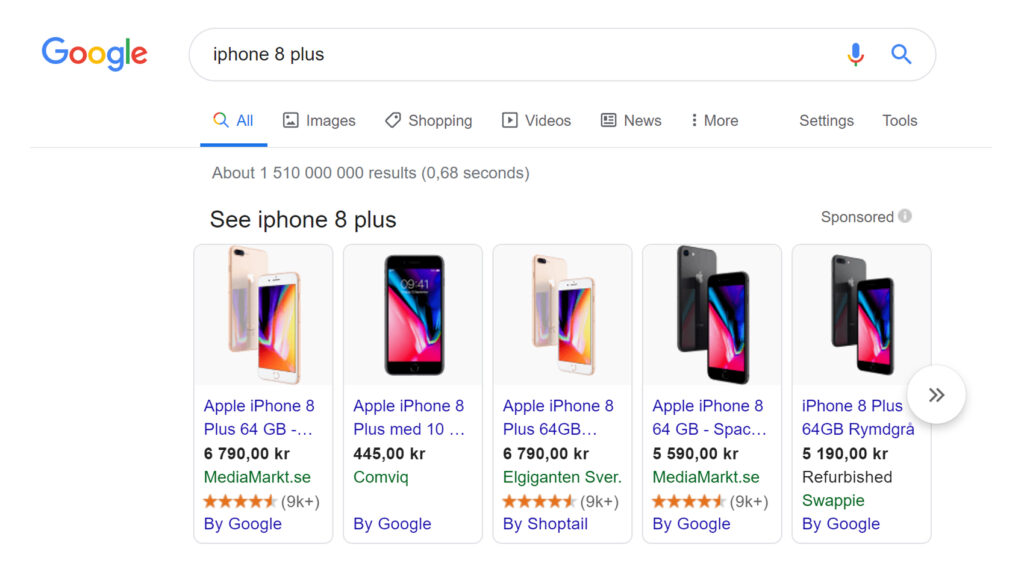
How does Google Shopping work?
Google Shopping is feed-based advertising and promotes products from a company’s inventory by showing price and images in the search result. To start advertising, a feed with products has to be uploaded in a platform called Google merchant centre. This platform has to be linked to a Google Ads account.
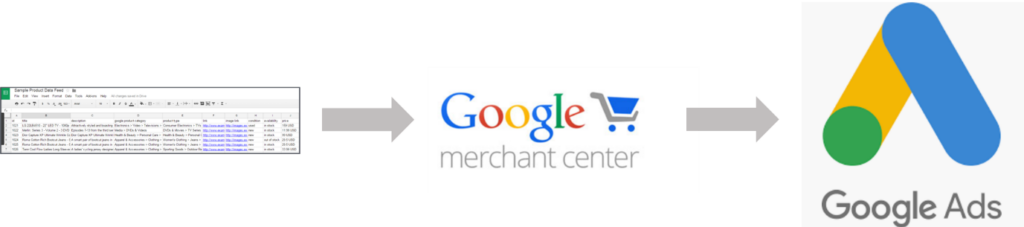
Google shopping campaigns are created in Google ads interface, based on the feed structure. Instead of keywords, product groups are used for bidding. For example, a campaign could consist of a main product category with subcategories set as product groups. Prices and stock statuses are updated on a daily basis. The way the feed is structured regarding attributes such as product categories, brands, colours and sizes, determines how the campaigns can be organised. If a feed doesn’t contain enough attributes, there are possibilities to add customer labels through additional platforms such as Lengow and Productsup.
Use Google or CSS
Google recently made Shopping ads on Google search results pages in the EEA and Switzerland available to all approved Comparison Shopping Services (“CSSs”), following the European Commission’s decision in 2017. This means that an advertiser could choose either Google Shopping or a different CSS.
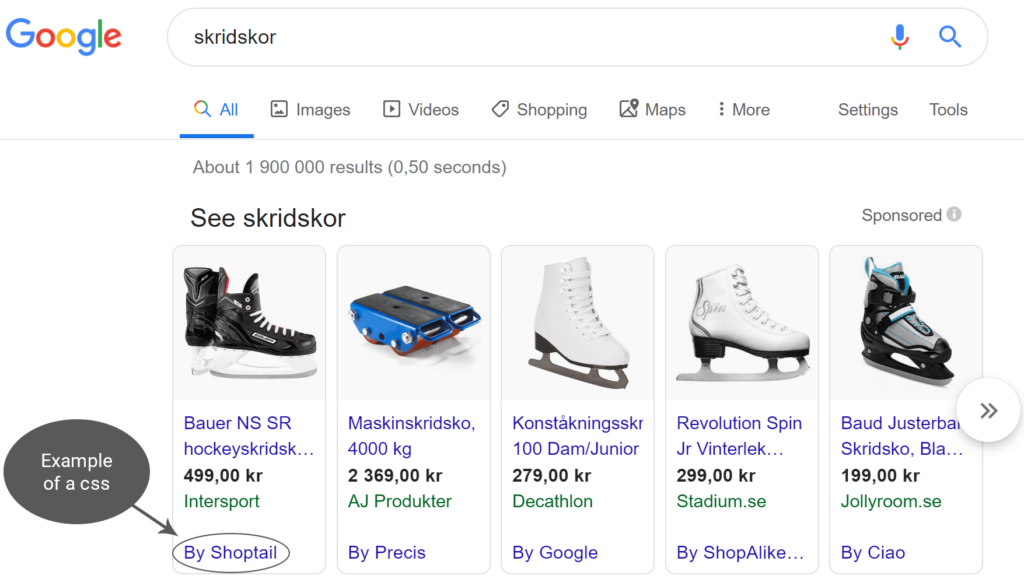
Since other participants were allowed, CPC prices for CSSs have become lower, making it a more inexpensive alternative. However, advertisers using other CSSs won’t get help regarding Google Shopping from Google ads support.
Why use Google Shopping?
- Since users receive information about the products such as price, colours and extra features already in the search result, they know what to expect when clicking on the ad. This results in traffic of high quality.
- Once a well-structured feed is in place and the advertising is up and running, the campaigns can be managed quite easily in the Google ads interface
- Google Shopping campaigns are compatible with a lot of functions in Google ads interface and with third-party tools such as Search ads 360.
- Broad reach – several products can be shown in the search result at the same time.
- Profitable ad format. Studies have shown that Shopping ads tend to have up to a 30% better conversion rate than comparable text ads.
Conclusions
Google Shopping is an increasingly important ad format that retailers should have good knowledge about. A tailored feed is essential and can be time-consuming and demanding to create, but usually pays off when it comes to result and time invested in campaign management. It has become more inexpensive to use other CSSs than Google since other participants were allowed.
When done right, advertising via Google Shopping can entail a lot of pros such as quality traffic, good conversion rate and broad reach.