Cheffelo scales visual production: 85% reduction in lead time. From 100 minutes to 15.
“By smooth and clear scoping, we have been able to translate image generation models into real-life business value—daily and at scale.”
— Adam Björklund, Chief Growth Officer, Cheffelo
Introduction
Cheffelo is a leading Nordic food company delivering meal kits and digital food experiences across multiple brands and markets. With a rapidly growing content operation and an increasing number of recipes, campaigns, and seasonal launches, Cheffelo faced mounting pressure on its visual content production.
The collaboration between Cheffelo and Curamando (together with other companies within Eidra) began in 2025, driven by a clear ambition: to modernize and scale visual content production using generative AI without compromising visual quality, brand consistency, or credibility. From the outset, the initiative was approached as a production‑grade AI capability, not a short‑term experiment, with a strong focus on operational integration and long‑term scalability.
By building on Cheffelo’s well‑defined visual identity and existing workflows, and by applying a rigorous AI engineering mindset, the foundation was set for translating generative AI into measurable, day‑to‑day business value across the organization.
Visual content production challenge: Scaling food photography
Cheffelo’s existing image production relied heavily on traditional food photography. While delivering high-quality visuals, this approach was time-consuming, costly, and difficult to scale. Each new recipe or campaign required extensive coordination, long lead times, and significant production effort
At the same time, Cheffelo needed to:
- Increase speed and flexibility in content production
- Maintain a consistent visual identity across brands, channels, and seasons
- Support growing demand for content across digital touchpoint
The key challenge was not whether AI could generate images, but whether generative AI could credibly replace traditional food photography in a production environment, meet strict brand standards, and be embedded into everyday workflows without adding complexity for internal teams.
AI image generation solution with workflow automation
Curamando approached the challenge by operational understanding and advanced AI engineering. Starting from Cheffelo’s brand guidelines, visual identity, and existing workflows. We designed and implemented a production-ready AI image generation solution utilizing a sophisticated multi-agent orchestration. The workflow is initiated via Slack, triggering a sequence of four specialized AI agents:
- Linguistic Interpretation: The first agent processes the text-based prompt, interpreting the culinary recipe and stylistic instructions
- Contextual Editing: The second agent refines the visual composition based on specific creative directives
- Multi-Perspective Generation: The third agent generates the dish from various angles as per the brief
- Detail Enhancement & Upscaling: The final agent handles high-resolution scaling and fine-tuning, such as enhancing textures (e.g. oregano leaves) and optimizing contrasts (e.g. the grain of a cutting board)
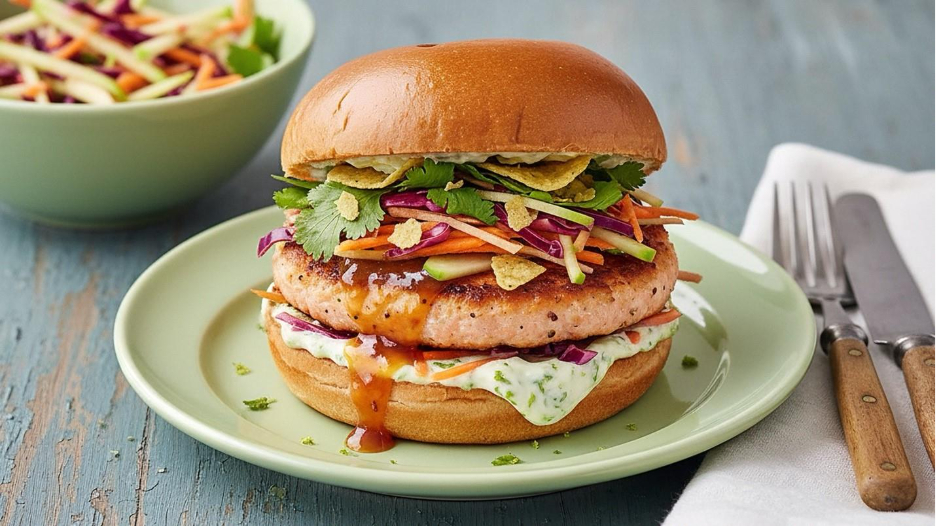
The solution enables Cheffelo’s teams to generate high-quality food images directly from recipe input, using a dedicated AI-driven image production agent. Rather than operating as a standalone tool, the solution was fully integrated into Cheffelo’s existing systems and processes, allowing images to be created, refined, and scaled on demand.
By focusing on real business needs and operational adoption, we ensured that the AI solution:
- Fits seamlessly into daily production workflows
- Preserves visual consistency and brand credibility
- Scales effortlessly across recipes, brands, and use case
The result was not an experimental AI pilot, but a scalable, enterprise-grade capability that supports Cheffelo’s content operation long term.
Visual content automation results: 85% production time reduction
The implementation of generative AI transformed Cheffelo’s image production process:
- From approximately 100 minutes to just 15 minutes per recipe. 85% reduction in production time
- Significantly reduced reliance on traditional photoshoots. With AI-generated images now replacing photography across a wide range of recipes and use cases
- Increased speed and flexibility. Enabling teams to respond faster to campaign needs and content demand
- Scalable daily usage. While the organization previously maintained a strong brand identity through two dedicated photographers, this AI solution ensures rigorous brand consistency while allowing a broader range of stakeholders to generate ‘on-brand’ assets. This shifts the expertise from a centralized bottleneck to a scalable, organizational capability.
- Delivering business value. The transition from physical to virtual production has fundamentally transformed the supply chain. Previously, the post-production process was resource-intensive, requiring, e.g., specialized chefs, studio rentals, and physical inventory. The traditional model was highly sensitive to supply chain disruptions; out-of-stock ingredients often forced costly rescheduling of entire photoshoots. With our agile AI workflow, images can be generated based on real-time inventory levels, ensuring a more sustainable and responsive content strategy. This agility also enables ‘trend-alert’ responsiveness, allowing the brand to capitalize on seasonal festivities (Christmas, Easter) or trending ingredients with immediate turnaround times.
Key success factors for AI content production at scale
- Focusing on real production needs rather than experimentation
- Deep integration into existing workflows, ensuring high adoption and low friction
- AI-generated imagery met rigorous standards for both brand alignment and high-quality output. Critical for replacing traditional photography
- Production-ready AI architecture. The solution is currently optimized for production-ready, enabling scalable daily usage. At present, the system is actively utilized by four key power users who manage the prompting and output validation for the organization
- Close collaboration between teams, combining creative excellence with technical innovation
Explore more AI transformation cases
AI chatbot for business: Boosting productivity with generative AI
AI Sentiment Analysis: PostNL Validates New Personalized Chatbot Experience
Conversational AI kiosks to streamline transfers for KLM passengers